
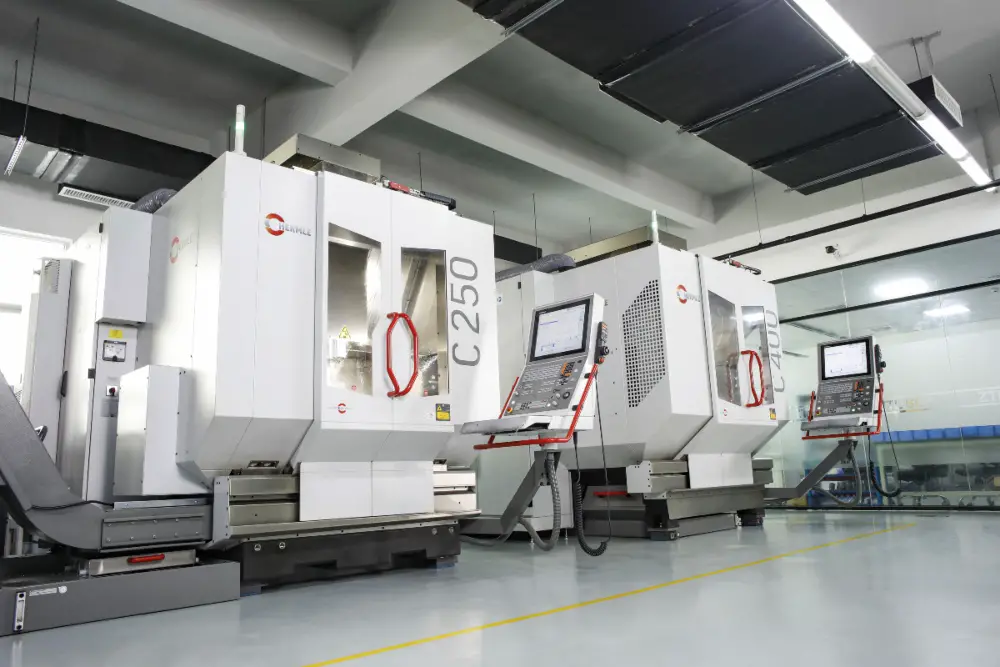
Modern computers do far more than power personal devices and smartphones; they also control the machines that build products, move materials, and operate factories around the world. From precision manufacturing equipment to automated warehouses, computer systems have become the central technology behind modern industrial machinery.
By combining sensors, control software, and mechanical systems, computers enable machines to perform complex tasks with high accuracy, efficiency, and safety.
Computer Numerical Control (CNC)
One of the earliest and most influential examples of computers controlling machinery is Computer Numerical Control (CNC).
CNC machines use computer programs to control the movement of tools and machinery during manufacturing. Instead of manually operating equipment, technicians create digital instructions that guide the machine’s movements with extreme precision.
The technology became widely adopted in manufacturing beginning in the late 20th century and remains a foundational component of modern production systems. CNC machining is now used in industries ranging from aerospace to medical device manufacturing because of its ability to produce highly accurate parts repeatedly. For a deeper explanation of CNC technology, the Massachusetts Institute of Technology provides an excellent educational overview of how CNC systems work in modern manufacturing environments.
Common examples of CNC machines include:
- CNC milling machines
- CNC lathes
- Laser cutters
- Plasma cutting machines
- Waterjet cutters
Because computers control every movement, CNC equipment can produce identical parts repeatedly with extremely small tolerances.
Industrial Automation Systems
Modern factories often use complex automation systems that combine multiple computer-controlled machines. These systems rely on specialized industrial computers called Programmable Logic Controllers (PLCs).
PLCs monitor sensors throughout a facility and control equipment in real time. For example, a PLC might:
- Start and stop conveyor belts
- Coordinate robotic arms on an assembly line
- Monitor temperatures and pressures in industrial processes
- Control motors, pumps, and actuators
Because these systems operate continuously and require high reliability, industrial computers are designed to withstand harsh environments, including vibration, heat, and dust.
Computers in Warehousing and Material Handling
Computers also play an important role in modern warehouses and distribution centers. Many facilities now Computers also play an important role in modern warehouses and distribution centers. Many facilities now use warehouse management systems (WMS) and automation software to coordinate the movement of goods throughout a facility.
These systems may control:
- Automated conveyor systems
- Robotic picking machines
- Sorting equipment
- Inventory tracking systems
According to research from the International Federation of Robotics, the use of robotics and automation in warehouses has grown rapidly as companies seek to improve efficiency and reduce manual labor requirements.
Computer-controlled equipment is also commonly used to position and move heavy materials safely. Industrial lifting equipment, such as lift tables, can raise or lower loads to ergonomic working heights, reducing strain on workers and improving productivity in manufacturing and logistics environments. Suppliers such as LiftTables.us provide industrial lift tables that are frequently used in material-handling operations where equipment must safely support heavy loads.
Sensors and Feedback Systems
A key component of computer-controlled machinery is the use of sensors and feedback systems. Sensors allow computers to monitor the physical environment and adjust machine behavior automatically.
Examples of industrial sensors include:
- Proximity sensors that detect nearby objects
- Load sensors that measure weight or pressure
- Optical sensors used in robotic vision systems
- Temperature sensors used in manufacturing processes
These sensors provide constant feedback to control systems, allowing computers to make adjustments in real time. This feedback loop helps machines maintain accuracy, detect problems early, and improve overall safety.
The Rise of Smart Factories
In recent years, advances in computing power and networking have led to the development of smart factories and the concept of Industry 4.0.
Smart factories use connected devices, cloud computing, and data analytics to monitor and optimize industrial processes. Machines can share information with each other, allowing entire production systems to adjust automatically based on changing conditions.
For example, a smart factory might use computer systems to:
- Predict equipment maintenance before failures occur
- Optimize production schedules automatically
- Track products throughout the manufacturing process
- Adjust machinery settings based on real-time data
These technologies allow manufacturers to increase efficiency while reducing downtime and waste.
The Future of Computer-Controlled Machinery
As computing technology continues to evolve, computers will play an even larger role in controlling industrial equipment. Advances in artificial intelligence, robotics, and sensor technology are already enabling machines to perform tasks that once required human decision-making.
Future industrial systems may include:
- AI-driven robotic manufacturing lines
- Fully automated warehouses
- Self-optimizing production systems
- Autonomous material-handling equipment
While the earliest computers filled entire rooms and performed relatively simple calculations, today’s computing systems are capable of controlling complex machines that power much of the modern economy.
From CNC machines to automated warehouses, computer-controlled machinery demonstrates how advances in computer science continue to shape the way industries operate around the world.